
Pregnancy changes your body week by week. Your centre of gravity shifts, your joints become more mobile, your cardiovascular system works harder and, as your baby grows, some movements that once felt effortless may become uncomfortable.
That does not necessarily mean you need to stop exercising. Being physically active is a great way to help you stay well during pregnancy. It can also help you go through labour with a better experience.
For most women with an uncomplicated pregnancy, regular physical activity is encouraged and can provide important maternal health benefits. Current evidence supports aerobic activity, resistance training and other appropriate forms of exercise during pregnancy, with the type and intensity adapted to the individual and stage of pregnancy.
The goal isn’t to maintain your pre-pregnancy performance at all costs. The goal is to keep your body moving in a way that feels appropriate for the pregnancy you are having.
Before You Start: Is Exercise Safe for You?
Before continuing with your current exercise routine or beginning a new exercise programme during pregnancy—talk to your obstetrician or healthcare provider.
Most healthy women without pregnancy-related complications can exercise, but some conditions require exercise to be modified, medically supervised or temporarily avoided. These can include certain heart or respiratory conditions, pregnancy induced diabetes, significant bleeding, placenta-related complications, cervical insufficiency, preterm labour or premature rupture of membranes.
Your exercise plan should therefore be individualised, rather than based solely on how many weeks pregnant you are.
For women who are cleared to exercise, a useful general target is around 150 minutes of moderate-intensity activity per week, spread across several days. The “talk test” can be useful: during moderate exercise, you should generally still be able to hold a conversation.
First Trimester: Keep Moving, but Listen Closely
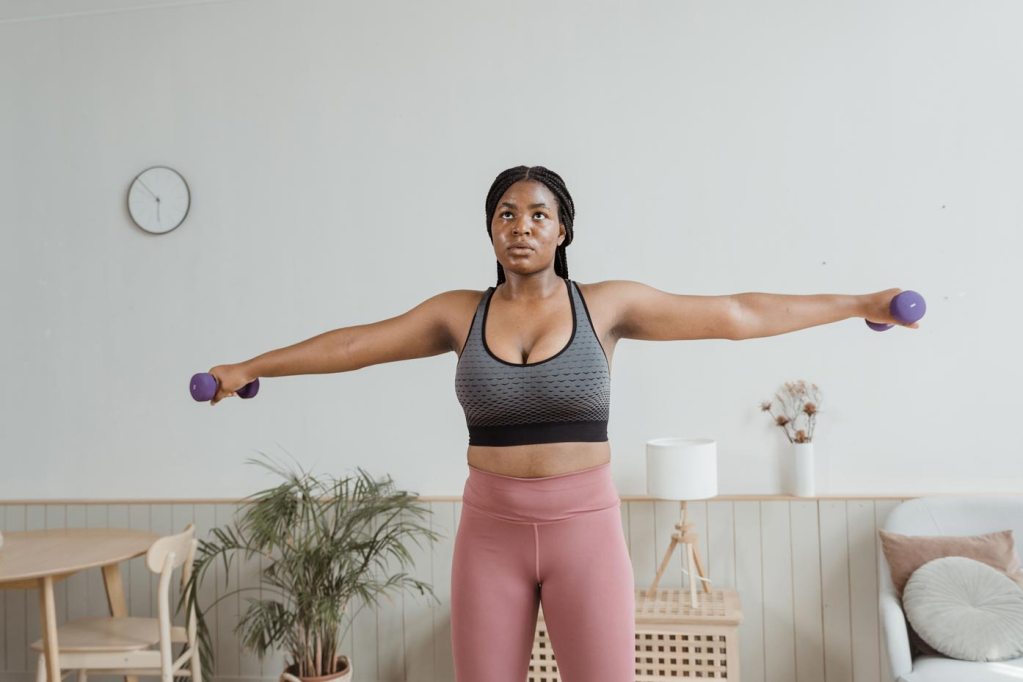
The first trimester can be physically unpredictable.
You may feel almost completely normal—or you may be dealing with nausea, vomiting, exhaustion, breast tenderness or headaches. Your exercise routine may therefore need to become more flexible.
If you were already active before pregnancy and your healthcare provider has no concerns, you can often continue many of your usual activities, with sensible adjustments.
Good options include:
- Walking
- Swimming
- Stationary cycling
- Light-to-moderate resistance training
- Prenatal Pilates or yoga
- Mobility work
- Pelvic floor exercises
- Low-impact aerobic exercise
The first trimester is not necessarily the time to dramatically increase your training volume or chase personal records. Instead, think about maintaining movement and building a foundation.
If nausea or fatigue is significant, shorter sessions may be more realistic. Ten or fifteen minutes of movement still counts. Your routine does not have to look perfect to be beneficial.
Hydration, appropriate nutrition, rest and avoiding overheating are also important.
What About Strength Training In The First Trimester?
Resistance training can form part of a healthy pregnancy exercise programme. A 2025 systematic review and meta-analysis involving 50 studies and more than 47,000 participants found that resistance training, either alone or within a broader exercise programme, was associated with several favourable maternal outcomes, although the researchers noted that many studies used multicomponent programmes and that more research is needed around precise resistance-training prescription and progression (Prevett et al., 2025).
In the first trimester, women who are already strength training can often continue with familiar exercises if their pregnancy is uncomplicated and their healthcare provider has no concerns.
The focus should be on maintaining strength and movement quality rather than increasing maximum loads or chasing personal records. In practical terms – pregnancy is not the time to prove how much you can lift. Focus on controlled movement, good technique, comfortable breathing and appropriate loading.
Think about:
- Using weights that allow you to maintain good technique throughout the exercise.
- Keeping your breathing natural rather than holding your breath during difficult repetitions.
- Allowing yourself more rest if fatigue, nausea or dizziness affects your usual capacity.
- Keeping your normal range of motion where it remains comfortable.
- Continuing exercises such as squats, rows, presses, hinges and supported lunges if they feel comfortable.
- Reducing the load or volume on days when pregnancy symptoms are more noticeable.
If you are new to strength training, pregnancy is generally not the time to begin with an aggressive or highly demanding programme. The first trimester is about building consistency, not testing or proving your limits.
A qualified professional can help you establish a gradual, controlled routine appropriate for your fitness level and pregnancy.
Second Trimester: Adapt as Your Body Changes

For many women, the second trimester brings a little more energy—but it also brings noticeable physical changes.
Your abdomen is growing, your centre of gravity is shifting and some movements may start to feel different. This is where modification becomes more important than stopping.
You may find that exercises such as squats, lunges, rows, resistance-band work, supported strength exercises, walking, swimming and stationary cycling remain comfortable. Other movements may need adjustments.
For example:
- Reduce the load if a movement feels unusually difficult.
- Widen your stance where necessary for comfort.
- Use support during balance-based exercises.
- Reduce range of motion if your growing abdomen becomes restrictive.
- Choose incline or elevated positions instead of exercises that place pressure on your abdomen.
- Avoid exercises that cause pain, pelvic pressure or leaking.
- Take longer recovery periods when needed between sets.
- Pay attention to how your pelvic floor responds during exercises.
You want to pay more attention to your pelvic floor. Pregnancy places increasing physical demands on the pelvic floor, and pelvic floor muscle training is commonly incorporated into prenatal exercise recommendations. Read more about how your pelvic floor behaves in our gynaecology section.
Evidence suggests that combining aerobic or resistance exercise with pelvic floor muscle training can reduce urinary incontinence during and after pregnancy, although the certainty of evidence varies between outcomes.
Importantly, pelvic floor training is not simply about doing as many Kegels as possible. Some women have an overactive pelvic floor that needs to learn how to relax as well as contract.
If you’re experiencing pelvic pain, pressure, difficulty emptying your bladder or bowel, or pain during intercourse, speak to your healthcare provider or a pelvic health physiotherapist. If an exercise suddenly feels very different from how it did before pregnancy, that is useful information—not something you need to push through.
Your breathing also matters. Instead of deliberately holding your breath while lifting, aim for steady, controlled breathing throughout the movement. The second trimester is about adapting your training to your changing mechanics.
Third Trimester: Prioritise Comfort, Mobility and Strength
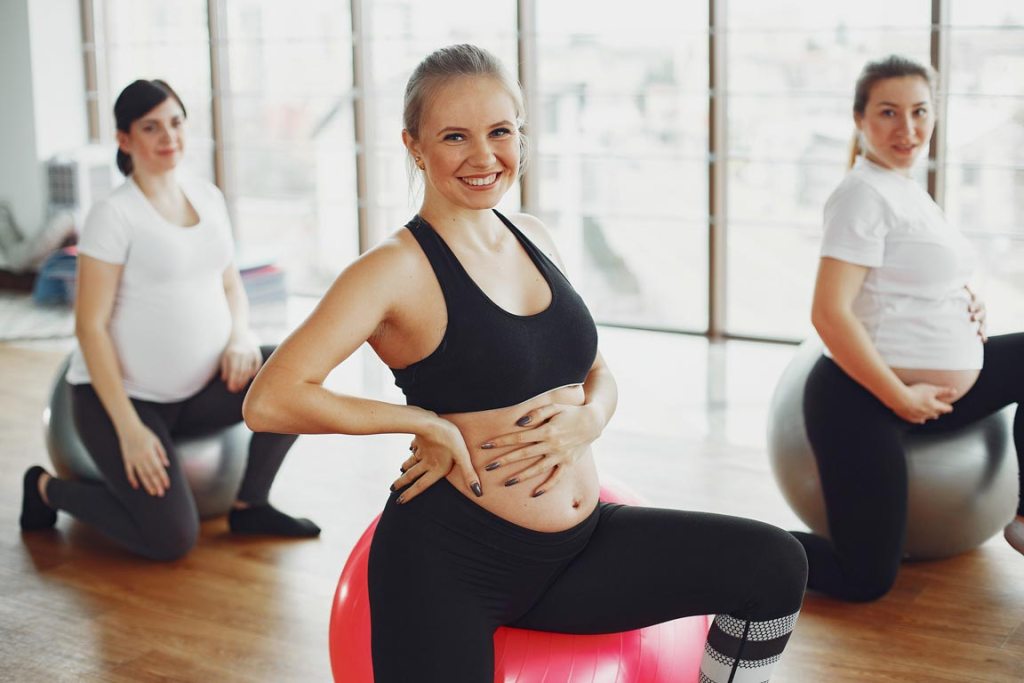
By the third trimester, your body has gone through a series of life changing adaptations and exercise is not to be ignored. Your body is carrying considerably more weight and your centre of gravity has shifted further.
Your growing baby can affect your balance, breathing, sleep, mobility and tolerance for exercise. You may also experience reduced balance, breathlessness, pelvic pressure, back discomfort or increased fatigue.
This is the time to focus on maintaining strength and mobility without unnecessarily exhausting yourself. Think about stable, controlled and comfortable movements as a priority.
Helpful options may include:
- Walking daily at a comfortable pace or stationary cycling
- Swimming or water-based exercise
- Choosing lighter loads that allow controlled movement
- Reducing the number of repetitions or sets
- Taking longer breaks between exercises
- Using supported positions for balance and safety
- Prioritising lower-body, upper-body & postural mobility that supports everyday activities
- Prenatal yoga, pilates or pelvic floor exercises
- Breathing and relaxation exercises
- Stopping an exercise if it produces pain, dizziness, pelvic pressure or other concerning symptoms.
You may need to reduce the duration or intensity of workouts and take more frequent breaks.
Exercises performed flat on your back may also need to be modified later in pregnancy, particularly if they cause dizziness, nausea or discomfort. Professional recommendations commonly advise avoiding prolonged supine exercise later in pregnancy and adapting positions according to individual tolerance.
The third trimester is also not the time to force flexibility. Pregnancy hormones can increase joint mobility, so aggressive stretching or pushing deeply into end ranges can be unnecessary.
Remember,a shorter workout is still a workout. Ten controlled minutes may be more appropriate for your body than a full session on a particularly tiring day. The third trimester is about maintaining useful strength while respecting your body’s changing capacity.
Across All Three Trimesters: Think Quality Over Numbers
There is no single weight, number of repetitions or intensity level that is appropriate for every pregnant woman. There is also no recommended amount of weight a pregnant woman should put on or be forced to lose during pregnancy. Most people put on between 10kg and 12.5kg. That’s mostly in the second half of pregnancy.
Your ideal training load depends on factors including your previous exercise experience, current fitness, pregnancy symptoms, medical history and whether any pregnancy complications have developed.
Everyone is different. The most important thing is to keep your weight gain to a safe and healthy level for you and your baby. Speak to your midwife if you have any questions about this.
A useful principle throughout pregnancy is: Control the movement. Breathe comfortably. Keep good technique. Adapt when your body asks you to.
If something feels wrong, don’t try to “push through” simply because it was part of your programme. Your exercise routine should support your pregnancy—not compete with it.
What Exercise Should You Avoid?
Not every type of exercise is appropriate during pregnancy. Activities involving a significant risk of falling, abdominal trauma or collision should generally be avoided or modified.
Activities with a higher risk of falling, abdominal trauma or collision should generally be avoided or modified during pregnancy. This may include contact sports such as rugby, hockey or martial arts, activities such as horse riding, downhill skiing, rock climbing, mountain biking, scuba diving and gymnastics and recreational activities where a fall or direct impact to the abdomen is more likely.
Your individual circumstances and experience level also matter, so speak to your healthcare provider if you’re unsure whether an activity is appropriate for you.
You should also avoid exercising in excessively hot environments and make sure you have adequate fluid intake.
Most importantly, pain is not something you need to push through because you’re pregnant.
Stop exercising and seek medical advice if you experience warning signs such as:
- Vaginal bleeding
- Leakage of fluid
- Regular or painful contractions
- Significant dizziness or fainting
- Chest pain
- Severe or persistent shortness of breath
- Significant calf pain or swelling
- Severe headache
- New muscle weakness affecting balance
These symptoms warrant medical assessment rather than simply modifying your workout.
Exercise Doesn’t Have to Look the Same Every Week
One of the most useful ways to approach pregnancy exercise is to stop thinking of it as a fixed programme. Your capacity can change from week to week.
A workout that felt comfortable at 20 weeks may feel completely different at 28 weeks. A session you planned may need to become a walk. A strength workout may become a mobility session. Sometimes rest is the most appropriate choice. That’s not failure. Pregnancy is a moving target, and your exercise routine can move with it.
Research continues to support the safety and potential benefits of physical activity during pregnancy for women without contraindications. Reviews have found no increased risk of preterm birth associated with moderate exercise, while newer evidence continues to support benefits across outcomes including gestational diabetes and hypertensive disorders.
At the same time, more exercise is not automatically better. The aim is not to exercise as much as possible. It is to move appropriately for your body, your pregnancy and your stage of pregnancy.
From the Consultation Room
Pregnancy can bring a lot of questions about what is safe, what needs to change and when it is time to slow down. Here are some of the questions that commonly come up in the consultation room.
“Can exercise hurt my baby?”
For women with an uncomplicated pregnancy who have been cleared to exercise, appropriate physical activity is generally considered safe and has important maternal health benefits.
The concern is less about ordinary, appropriately modified exercise and more about situations where exercise is contraindicated, excessive, performed in extreme heat, or carries a significant risk of falling or abdominal trauma.
If you have a pregnancy complication or have been advised to restrict physical activity, follow the guidance specific to your pregnancy.
“I didn’t exercise before pregnancy. Can I start now?”
Pregnancy does not mean you have to remain inactive if you were not exercising beforehand. Many women can begin with gentle, manageable activities such as walking, swimming or appropriately supervised strength and mobility work.
Start gradually rather than trying to make up for lost time. Short, regular sessions can be a useful starting point, and your healthcare provider can help determine what is appropriate for you.
“When should I stop doing exercises on my back?”
This is a common question, particularly as pregnancy progresses.
Exercises performed flat on your back may become uncomfortable later in pregnancy. If you experience dizziness, nausea, breathlessness or discomfort in this position, change position rather than trying to push through it.
There isn’t necessarily a specific week when every woman must stop every back-lying exercise. Your comfort, symptoms and individual pregnancy matter. Your healthcare provider can advise you about specific exercises if you’re unsure.
“What does it mean if I leak urine when I exercise?”
Urinary leakage during exercise is relatively common during pregnancy, but common does not mean you have to accept it as something you simply live with.
Pregnancy places additional demands on the pelvic floor, particularly during activities that increase pressure through the abdomen, such as running, jumping, coughing or lifting.
Pelvic floor muscle training can be helpful, but not every pelvic floor problem is caused by weakness. Some women have an overactive pelvic floor that needs help with relaxation and coordination. Persistent leakage, pelvic pain, heaviness or pressure is worth discussing with your healthcare provider or a pelvic health physiotherapist.
“How do I know when exercise discomfort is no longer normal pregnancy discomfort?”
This is perhaps the most important question.
Some breathlessness, tiredness, muscle fatigue and changing movement patterns can be part of pregnancy. Severe, sudden or unusual symptoms should not simply be attributed to being pregnant.
Stop exercising and seek medical advice if you experience symptoms such as vaginal bleeding, leakage of fluid, regular painful contractions, significant dizziness or fainting, chest pain, severe shortness of breath, or other symptoms that concern you.
When in doubt, stop, listen to your body and speak to your healthcare provider. Your exercise plan can always be adjusted; your symptoms deserve attention.

The Maxima Takeaway
Pregnancy does not automatically mean putting exercise on hold. For most women with uncomplicated pregnancies, staying active can be part of a healthy pregnancy—but your exercise routine should evolve alongside your changing body.
Move regularly. Modify when needed. Rest without guilt. Don’t be afraid of speaking to your healthcare provider when you’re unsure about something. When it comes to your health and the health of your baby, it is important to consider all points of effect.
Ready to Make Your Pregnancy Exercise Plan More Personal?
Your pregnancy is unique, and your exercise routine should be too.
Speak to the Maxima Women’s Health team about what physical activity is appropriate for your pregnancy and how you can stay active safely.
Talk To A Professional About Your Symptoms
If something has changed in your bladder, bowel, pelvic or overall physical health during your pregnancy, it is worth understanding why.
Book an appointment with Maxima Women’s Health and get answers through compassionate, professional care.
Learn More About Your Pregnancy Health
Understanding what is normal for your body can make it easier to recognise when something needs attention during pregnancy is essential.
Read more about your health and well-being on our website.
Leave a Reply